One hope that I have when thinking about working with children and families who come from diverse backgrounds is that they will be able to feel comfortable and respected being who they are, not what society wants or expects them to be.
One goal I would like to set for the early childhood filed related to diversity, equity, and social justice is that all children and families will have equal opportunities to live, learn, and work in a society that accepts them for who they are and will not make judgments based on race, culture, sexuality, gender, etc.
This has been an amazing course. You all have certainly educated me through your thoughtful discussions and posts. All of our perspectives about diversity and equity and the new information gathered will be a great benefit to the children and families we work with or may work with in the future. Good luck in future courses.
Amanda
Friday, August 17, 2012


Friday, August 10, 2012
Welcoming families from Around the World
Before this course, I really did not understand how important knowing about a person's country of origin was. So, I could probably pick any country because I never took a tremendous amount of time to truly prepare myself to be culturally responsive. Let's pick Haiti for this assignment.
To prepare myself and my classroom to be culturally responsive, I would research as much information as possible about the country. Learning the language fluently would be impossible in such a short amount of time, but learning a few common words and phrases would be beneficial and most likely make the family feel welcomed. Scheduling a home visit with the family before the child started in the classroom would also help to gain knowledge about the family, their culture, and their child. Observing how the family interacts with one another and the child, as well as continuing to observe the child in the classroom would help to gain a lot of information about how the family functions, what they find important, their interests, and the child's temperament. Talking with other colleagues may help to gain information about the country and/or ways to help the child and family be successful. And lastly, bringing as much of the child's culture into the classroom, along with every other child's culture.
These preparations would help build positive communications between the child and their family. A bit of trust and comfort may come from the home visit as well as the effort put into learning a few common words/phrases in their language. Bringing the child's culture into the classroom and helping all children understand their own culture and that of others will help to build a positive self-identity. For myself, the preparation and continued observations will build my knowledge of diversity and continued learning.

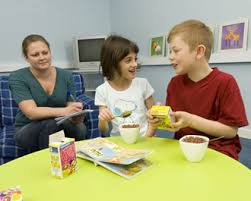
To prepare myself and my classroom to be culturally responsive, I would research as much information as possible about the country. Learning the language fluently would be impossible in such a short amount of time, but learning a few common words and phrases would be beneficial and most likely make the family feel welcomed. Scheduling a home visit with the family before the child started in the classroom would also help to gain knowledge about the family, their culture, and their child. Observing how the family interacts with one another and the child, as well as continuing to observe the child in the classroom would help to gain a lot of information about how the family functions, what they find important, their interests, and the child's temperament. Talking with other colleagues may help to gain information about the country and/or ways to help the child and family be successful. And lastly, bringing as much of the child's culture into the classroom, along with every other child's culture.
These preparations would help build positive communications between the child and their family. A bit of trust and comfort may come from the home visit as well as the effort put into learning a few common words/phrases in their language. Bringing the child's culture into the classroom and helping all children understand their own culture and that of others will help to build a positive self-identity. For myself, the preparation and continued observations will build my knowledge of diversity and continued learning.
Sunday, August 5, 2012
The Personal Side of Bias, Prejudice, and Oppression
A recent example of bias that I came across was in a book my son is reading for Middle School. As the family was sitting around the table eating dinner the daughter asked her father how many square feet in an acre. And later in the conversation then asked her mother for a stamp, an envelope, and a piece of paper. As dinnertime continued, the mother made the comment, "Speaking of gender issues, why did you ask your father about the number of square feet in a n acre? Why not your mother?" The daughter replied, "I thought acres was men's stuff". After asking for the stamp, envelope, and a piece of paper, her mother replied, "Ask your father, he's the stamp, envelope, and paper person". The girl threw her hands up and said, "I give up. I'll never figure out this gender business". Although these statements were made in a joking manner, it goes to show that even young children have learned bias/gender behaviors.
This type of bias diminishes that equity for men and women are not seen as equal in our society. That often times men's roles and women's roles are based on traditions beliefs and values. In this example, the female is the one considered to take care of the "writing" aspect and the male is the math expert.
Feelings that this example had for me at first was a feeling of Wow! There are books out there for children that actually do provide teachable moments based on gender bias. I then had the feeling of understanding how our children do learn such bias from those around them and how it is our responsibility as adults, like the mother in the story, to use teachable moments with young children to help eliminate gender bias and encourage children to be involved in interactions opposite than what society expects.
Who would have to change? Society as a whole. Employers would have to revisit who they hire for what jobs. Families would have to explore the daily duties of mother and father, toys and activities that boy and girls engage in. Religions would have to take a look at their beliefs of what men are put on this earth to do as well as women. And people need to be more educated on the impact that biases have on society as a whole.
Spinelli, J. (1996). Crash. New York, NY: First Scholastic printing.
Thursday, July 19, 2012
Practicing Awareness of Microaggressions
This week, so far has been extremely hot and humid, which was a great time to spend time together at a waterpark/amusement park with my three children and cousins. As I packed up our things, I thought about this blog assignment and put on my microaggression glasses. Wasn't hard to immediately notice microaggressions around, including with my own family and even within myself (if thinking and becoming upset inside, rather than speaking outloud is a type of microaggression). Let me explain the example of feelings within myself, that may have slipped out a little! Before the park opens our National Anthem is played and the announcement is to please remove your hats out of respect for our country. As I looked around I was appalled at the number of adults that chose to leave their hats on, not to mention the talking, people of all races. So I motioned to a man across from me to take off his hat, he did and smiled. My opinion is that someone shouldn't have to tell you to do that. You should be proud of living here in the United States and respect our country. I guess this may not be a form of microaggression, but rather peoples disrespect behavior towards our country. Ok, enough of that situation that had me a bit fired up.
Major microassault came from the mouth's of my cousins. There was something to say about every race and ability there. Such as "don't you know blacks can't swim?", "I couldn't even understand what he was saying". The sad thing was that there 10 year old son makes similar comments about people to my son. So, I had a talk with my son and mentioned that what he is saying is disrespectful and to walk away when he is making those comments. Soon the boy got the hint and I didn't hear anything else. The parents on the other hand finally got the hint when I did not respond to there comments.
I truly believe that working with such a diverse group of individuals has made me accept and appreciate differences among people. And to hear the blatant remarks that really were uncalled for (the victims were doing nothing harmful or disrespectful) really made me cringe. Now I need to figure out how to address those making such microaggressions in a respectful but matter of fact way.
Saturday, July 14, 2012
Perspecitves on Diversity and Culture
For this assignment I chose to ask a co-worker who has been in the early childhood field for at least 20 years, my husband, and my son, Trevor who is 11 years-old. Below are their responses:
Culture-
"How a group, family behaves, what they believe, how they dress,eat, based on their ethnicity and the environment they live. Culture is driven by ethnicity but becomes absorbed and changes overtime as the people become a part of their environmental influences- A Arabic family may still eat typically ethnic food and speak their native language, but adapt to environmental influences regarding dress, social norms to become accepted while maintaining the values they deem important to their ethnicity."
"religion, ethics, morals, and beliefs"
"Everything around you. Like your family, your house, your pets, your belongings. The way families act, vehicles they ride, language and sign language."
Diversity-
"The differences within a group of people, culture, or ethnic group."
"Everybody has their own beliefs and are entitled to their own beliefs"
"Something that is different. Diversity would be a good thing, but different. Everybody is right, nobody is bad."
From the answers you could probably tell that the first response was the early childhood educator, the second my husband, and the third my son. Between the three of them, they mostly hit deep culture elements. My son may have been the closest with touching on surface culture, such as your house, pets, and belongings. A few elements that were omitted by all three are gender roles, health care, and showing emotion.
Their responses have made me realize that my family knows more about culture and diversity than I thought!! And that it is not just surface culture that is being valued, but deep culture as well. However, when I asked my son if they talk about culture in school, he said "no". That for me was disheartening. With our society becoming more and more diverse, culture and character education should be at the forefront of the Social Studies curriculum. Time for a trip to see the principle!
Thursday, July 5, 2012
My Family Culture
Three items that I hold dear and which I consider to represent my family culture are:
1. My family scrapbook
The scrapbook is one that I have been working on since my first chid was born. It holds memories of my children's births, family, friends, vacations, and many other activities our family and friends have enjoyed together. Even today, our family often takes out the book and looks at it and talks about the fun times together and who the family members are in the photos, past and present.
2. My coin collection
The coin collection comes from my late grandfather, who originally had given it to my mom, who then passed it down to me. All 3 of his children received a set, however, my mother is the only one who did not sell them. Now that my grandfather is no longer with us, and with his passing came family turmoil, which resulted in his biological children receiving none of his personal belongings, I still have a piece of him with me. I also know that it means a lot to my mom that I value our family enough to hold on to a part of her dad. Even though I plan to never get rid of the coins, in a situation where the coins could possibly reunite me with my country and the rest of my family, I would consider using them only for that instance.
3. Our birth certificates, social security cards, liscenses, etc.
Not really sure why, but never know when you might need them. Not sure what the other country requires. So I guess they would be good items to have when going to the unknown. When my children grow up, they would have these documents.
If I had to give up 2? I certainly would want to keep the one that would benefit our family in the future. Which 1 would possibly reunite us with the rest our family and possibly give us the opportunity to leave the host country if need be. I guess I would have to give up the scrapbook and coin collection. However, if I thought the possibility of being reunited with family and friends and leaving the host country was never possible, I would give up the coin collection and birth certificates, social security cards, liscenses, etc.
I guess this assignment has made me think that I am optimistic and think about what is best for the future. Family is certainly important, however, thinking about what would make our family happy and successful in the long run is a priority.
Thursday, June 21, 2012
When I Think of Research...
This course has taken me on quite a bit of a journey. In the beginning, learning how to evaluate research articles was a huge help not only for this course, but for future courses. At first glance, the number of pages seems overwhelming, but by following the pattern of research articles and knowing what to skip was, and will be, extremely helpful in reading and writing research papers. Through my career, I have been exposed to research, however, not to the extent that this course has done. Defining and experimenting with the types of research approaches (quantitative, qualitative, and mixed-method), has made me think through the nature of research studies and just made me more aware of vocabulary used in such studies. What lessons have I learned about planning, designing, and conducting research? EVERYTHING! I didn't realize how much preparation goes into such studies, issues that can arise with participants, and the whole idea of ethics and ethic committees. I have also learned that children, just like adult participants, should be given just as much respect throughout the entire research study, even when their parents sign the consent to participate. I guess from working with children and building that positive rapport, I looked at it as...children love the attention and when finished with the study move on to what makes them happy.
There were many challenges, and still are! Trying to figure out a research question that is narrowed and focused and trying to keep the vocabulary straight and apply it to my own application papers are two challenges I can think of. Rereading the information and searching on the internet for articles that may have clarified things easier were two strategies that I used. Also reflecting on Dr. Myer's comments and through colleague discussions, helped me to see things in a different perspective. Early childhood professionals have a high standard to uphold in their everyday careers, especially those doing research on young children. A lot of time and effort goes into making sure that research is being done for a purpose, respectfully, and in a manner that is valid. I can see myself paying closer attention to reading research studies, after taking this course.
There were many challenges, and still are! Trying to figure out a research question that is narrowed and focused and trying to keep the vocabulary straight and apply it to my own application papers are two challenges I can think of. Rereading the information and searching on the internet for articles that may have clarified things easier were two strategies that I used. Also reflecting on Dr. Myer's comments and through colleague discussions, helped me to see things in a different perspective. Early childhood professionals have a high standard to uphold in their everyday careers, especially those doing research on young children. A lot of time and effort goes into making sure that research is being done for a purpose, respectfully, and in a manner that is valid. I can see myself paying closer attention to reading research studies, after taking this course.
Subscribe to:
Posts (Atom)